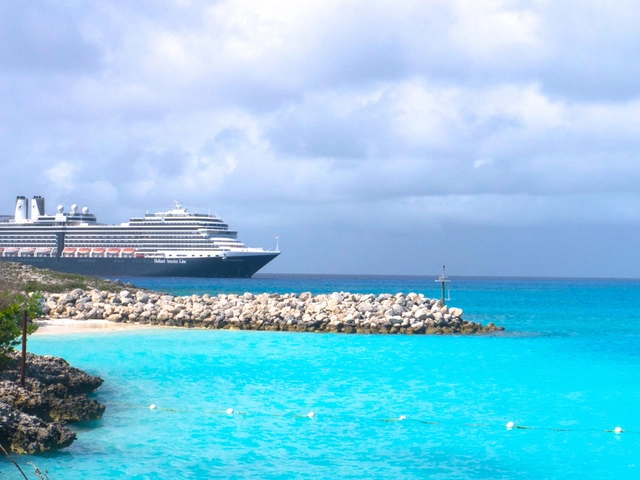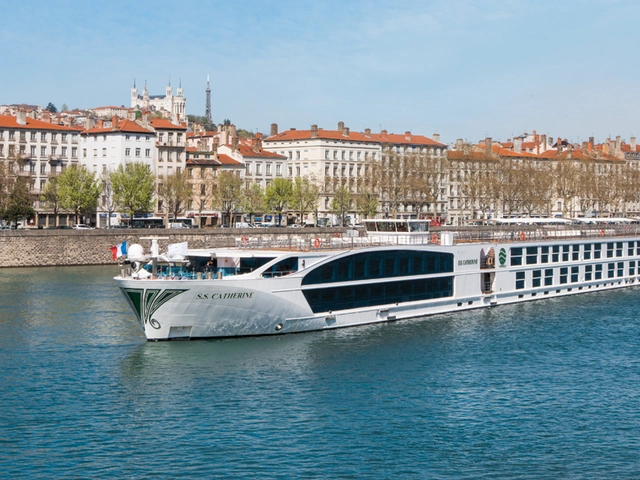
After years of exploring the world aboard expedition ships and intimate river cruises, a luxury train through Rajasthan revealed that slow travel isn’t about the vessel, it’s about the journey.
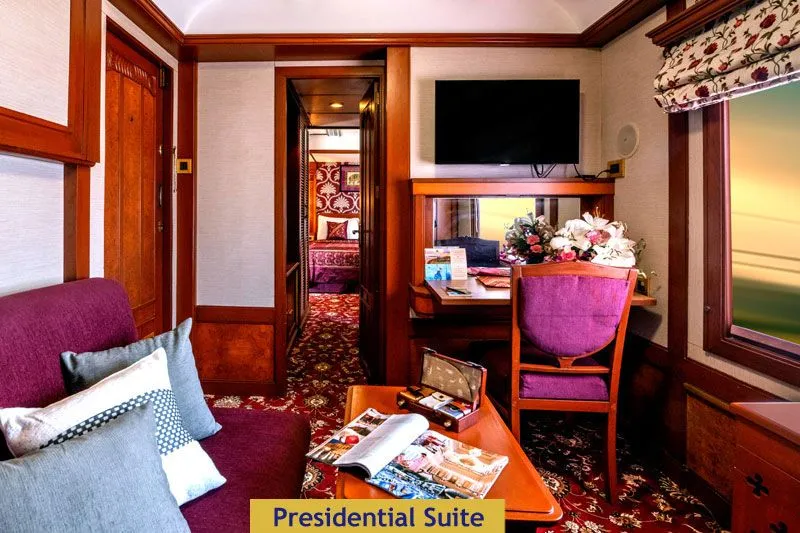
I’VE SPENT YEARS EXPLORING the world aboard expedition ships and intimate river cruises in the Antarctic and Arctic, on the Mekong, Irrawaddy and Brahmaputra Rivers in Southeast Asia, as well as other destinations including Tahiti, the Galápagos, Alaska and Hawaii. I didn’t expect a luxury train through Rajasthan to evoke the same feeling of slow, immersive travel, but the Deccan Odyssey did exactly that. On my fifth visit to India, I boarded a train in Delhi with a welcome fi t for royalty. The red carpet, strewn with fresh flower petals from the station entrance to the train, was just the beginning of a journey that Maharajas and Maharanis might once have taken. The ornately painted royal blue doors of the Deccan Odyssey opened, and we climbed aboard. Our Presidential Suite came with a butler, available 24 hours a day to wake us each morning, bring coffee, tea and snacks, maintain our suite, collect our laundry and make us comfort-able throughout the journey. We had two bathrooms with showers and a sitting area. Regular compartments are about 95 sq. ft and have a double or twin beds and a bathroom with shower. The elegant traditional Indian décor and polished wood finishes felt warm and welcoming. Our butler escorted us on a tour of the public spaces, including the two dining cars, the bar and lounge, and the spa car.
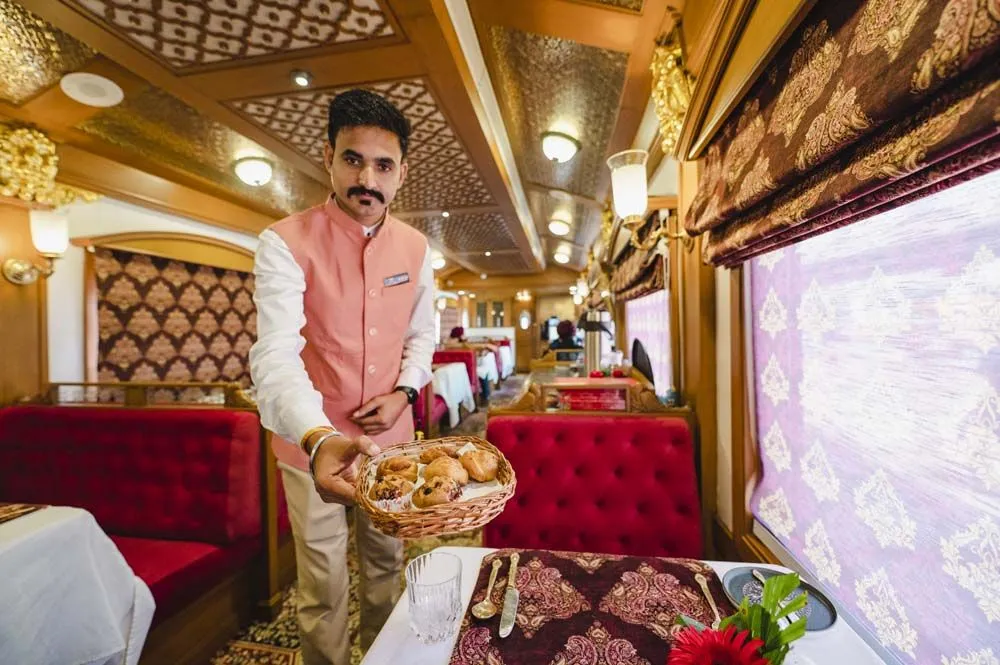
The train had 21 rail cars, accommodating 88 guests although on our trip, there were 37 guests and 58 staff . The surprise wasn’t that it was luxurious. It was that I was immediately reminded of the joy I always feel when boarding a boutique cruise ship. My floating hotel had become a rolling hotel. The similarities between the two modes of travel surprised me. I unpacked my clothing and personal be-longings at the beginning of our train journey, just as I always do aboard small ships. Our butler and the on-board staff quickly learned our names and preferences, creating the same welcoming atmosphere I’ve experienced on my favourite expedition and river ships. Meals were wonderfully relaxed. With the freedom to sit wherever we wished, we alternated between the two beautifully appointed dining cars, sometimes sharing a table with new friends and sometimes enjoying dinner on our own. Each evening, we naturally gravitated to the bar car, where guests gathered over cocktails and wine to exchange stories about the day’s excursions, compare shopping finds and reflect on the experiences we’d shared. We shared quiet moments together enjoying the silence within the train, while commuter trains passed, and the scenery changed outside our window. I even treated myself to a relaxing massage and had my hair done in the lovely spa car. Like many cruises, meals, beverages and daily excursions were all included, making it easy to simply enjoy the journey without thinking about logistics. Every morning, we awoke in a different city, ready for another ad-venture, while the train quietly covered the distance overnight.
The gentle sway of the train and the rhythmic clickety-clack of the rails lulled me into a deep sleep at night, just as the motion of the sea has done on countless voyages. Watching the sun-rise and life awakening from our cabin window gave me butterflies. Travelling by rail revealed India in a way that no ship ever could. Between the great cities and famous monuments, the country unfolded outside our windows in an endless series of everyday moments. Small villages appeared and children waved enthusiastically as the train rolled past. Farmers worked their fields under a blazing sun. Tiny railway stations bustled with colourfully dressed passengers, while tea vendors served steaming cups of chai on the platform. Walking in a dusty railway village at Sawai Madhopur, we curiously watched women washing baby water buffaloes and accepted invitations to come to their small farms. It was these unstaged moments, that I felt grateful for and found so memorable.
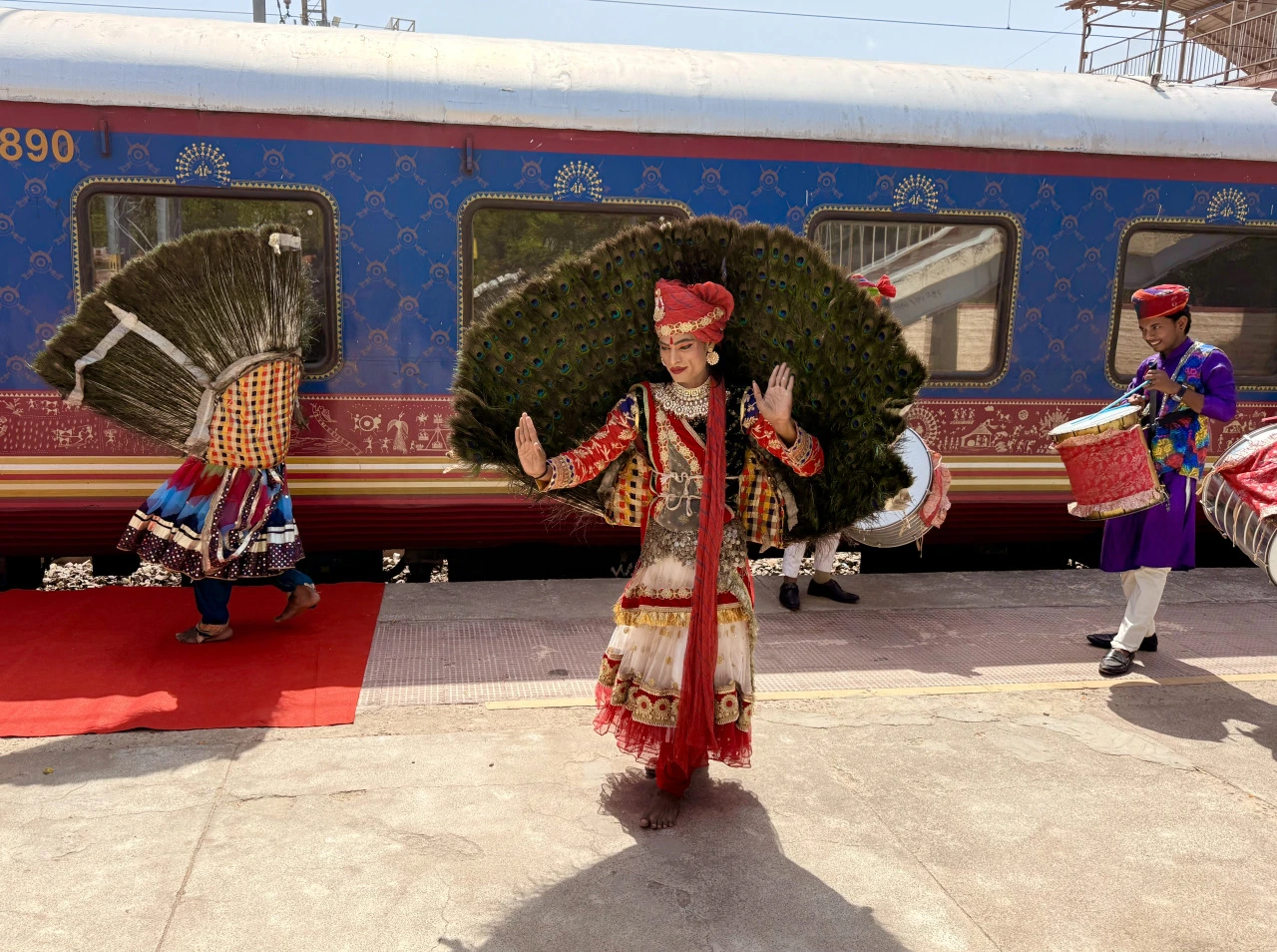
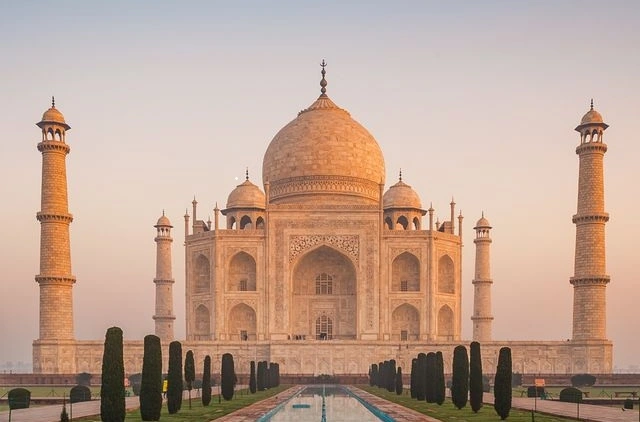
On a cruise, the landscape often serves as a beautiful backdrop between ports. On the Deccan Odyssey, the landscape became part of the story. I wasn’t simply arriving in Rajasthan. I was watching Rajasthan gradually reveal itself over the 2,450 km journey. Each day introduced a different chapter of India’s remarkable his-tory and culture, and while I had been to Rajasthan several times in the past, arriving by train felt festive and different. Local musicians welcomed us on the station platforms in colourful costumes and led us from the Deccan Odyssey to our waiting tour vehicles. The romance of ancient India came alive in Agra. No photograph can prepare you for the scale, symmetry and emotion of seeing this extraordinary monument to love and loss in per-son. We sat together, holding hands, on a bench for over an hour reflecting on the love between the Mughal Emperor Shah Jahan and his favourite wife, Mumtaz Mahal, who died in childbirth in 1631. The Taj Mahal is the final resting place for Mumtaz Mahal. At Ranthambore National Park, we set out in search of Bengal tigers. Although wildlife sightings are never guaranteed, the anticipation of spotting a tiger added another dimension to the journey. After a three-hour safari, not even one tiger made an appearance. I laughed and bought a Ranthambore ball cap with an embroidered tiger on it as a consolation prize.
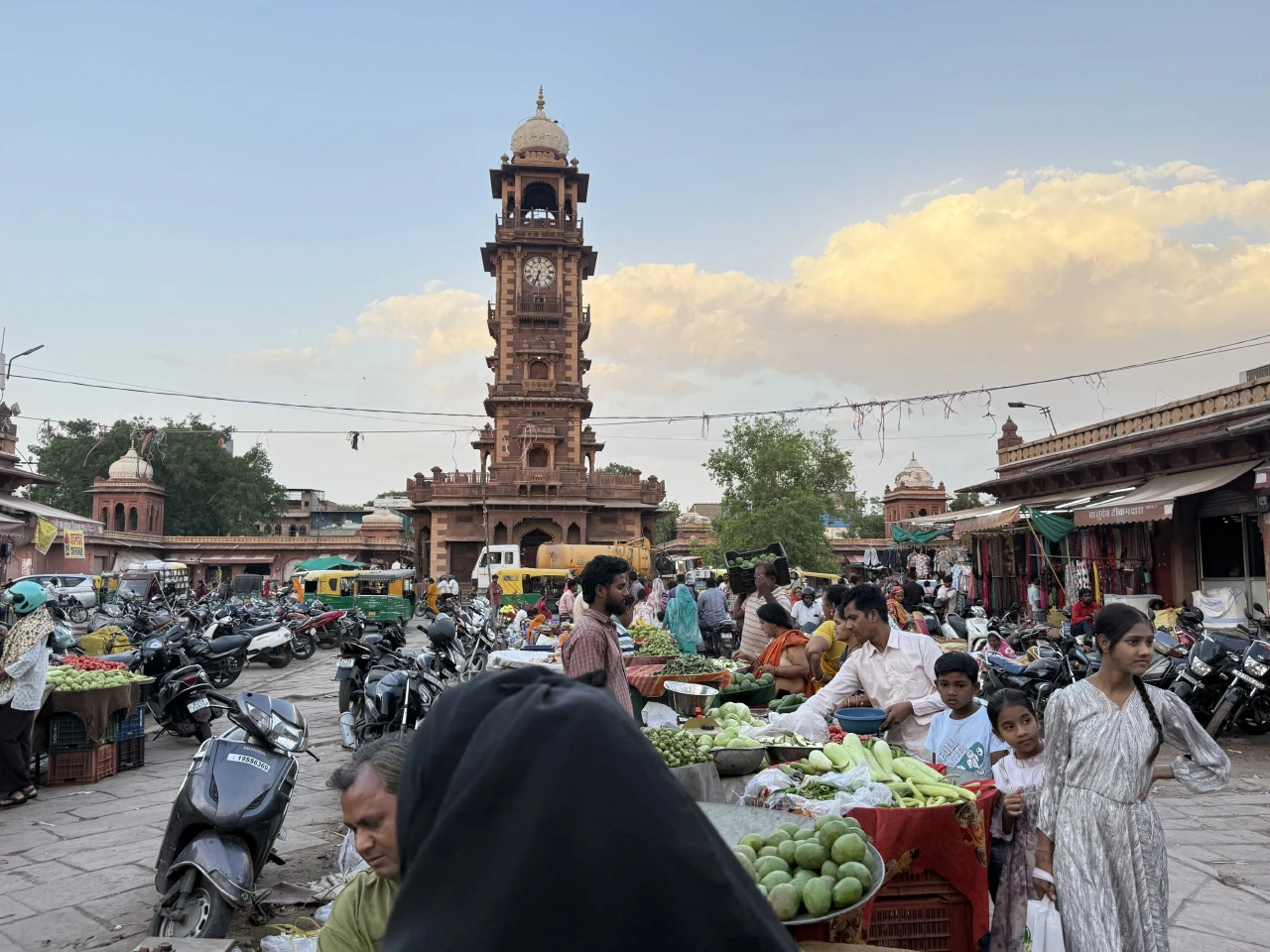
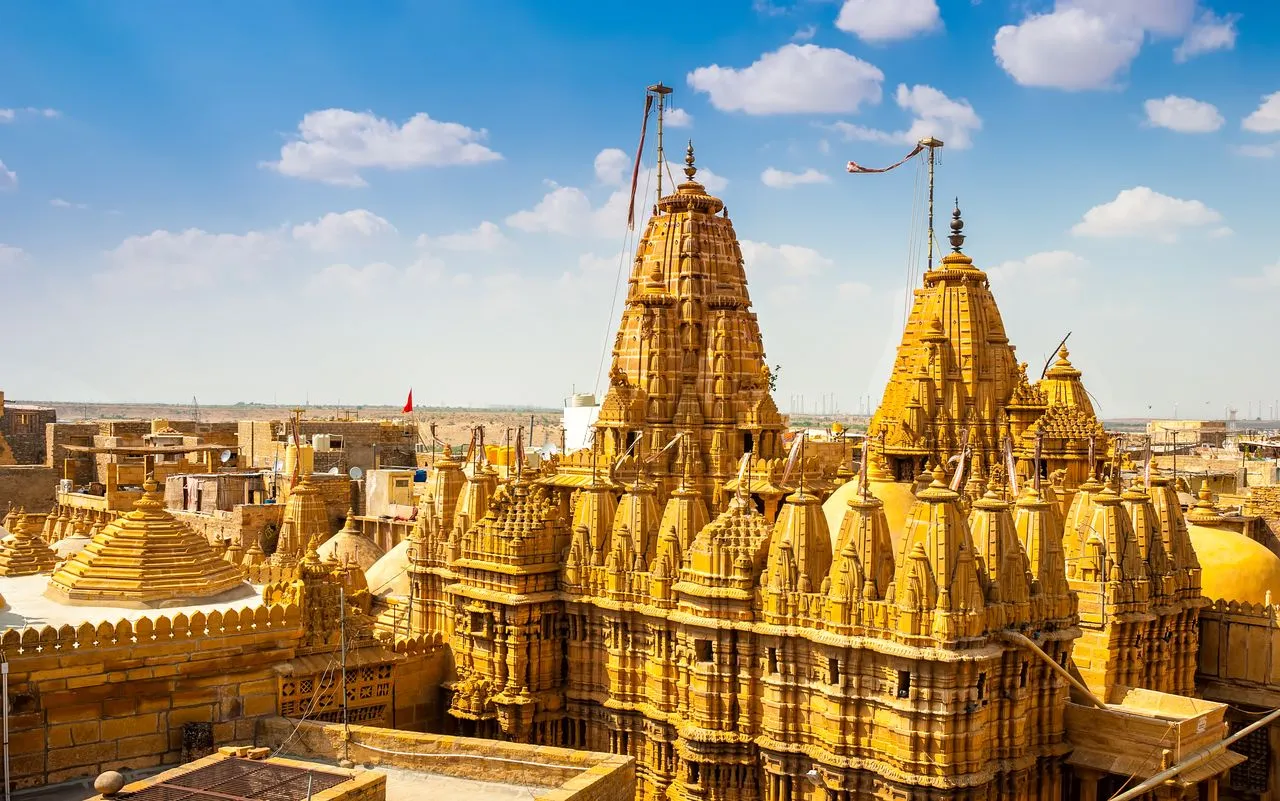
There was royal India, where magnificent palaces and imposing forts told stories of the Rajput kingdoms. In Jaipur, the Pink City dazzled with its grand architecture and colourful markets. Jodhpur’s Mehrangarh Fort rose dramatically above the blue houses below, and the water in the deep step-well near the city centre glistened in the sunlight, while in Udaipur the shimmering lakes, the iconic Taj Lake Palace Hotel and elegant City Palace, revealed a more romantic side of Rajasthan’s royal heritage. In Jaisalmer, the Golden City, sandstone buildings glowed in the morning sun as we wound our way along the narrow streets in one of the world’s most beautiful living forts. Cows and dogs roamed freely in the streets approaching us for any food that might be in our pockets or bags.
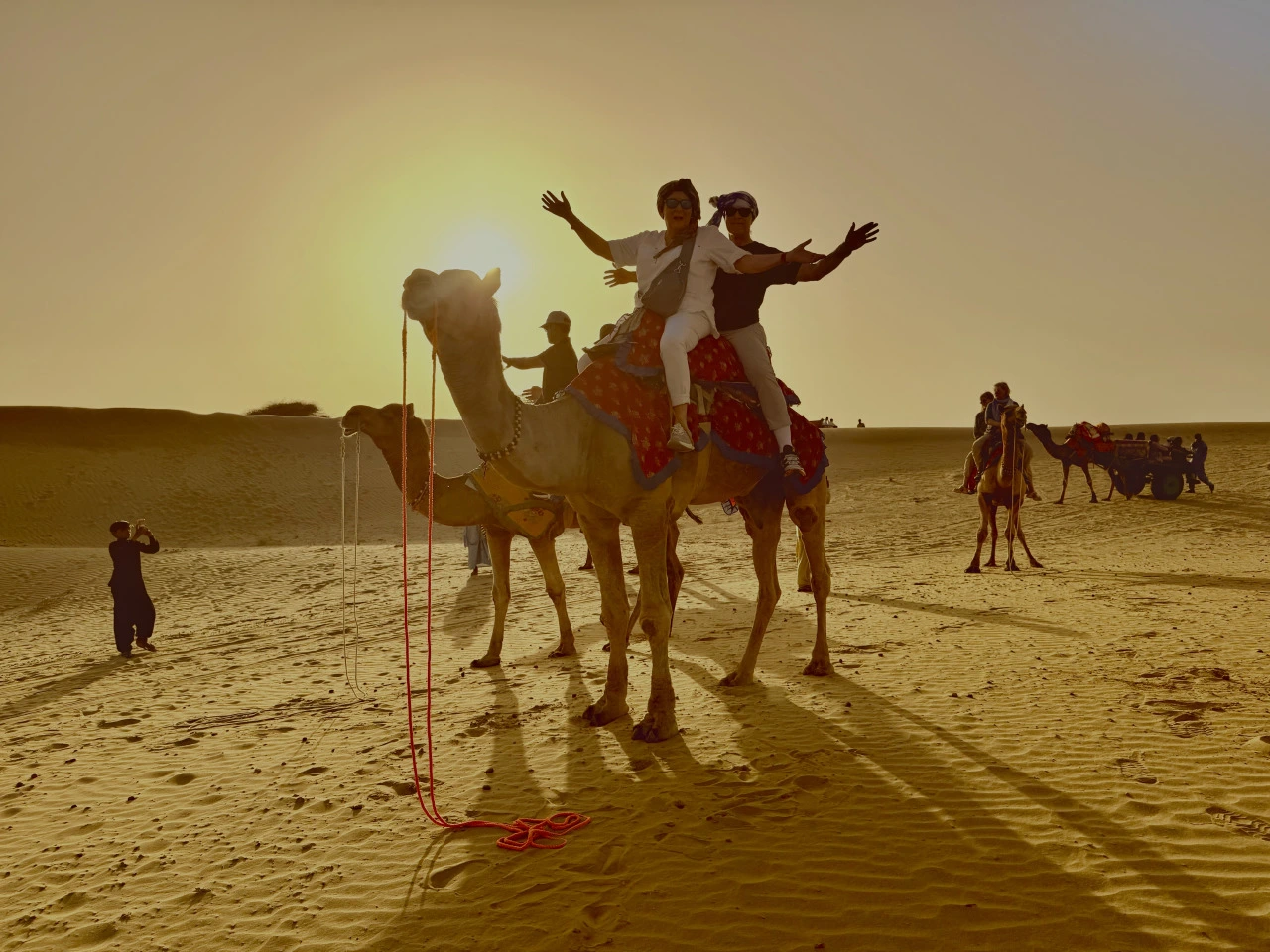
A visit to Jaisalmer would not have been complete without a roman-tic sunset camel ride in the Thar Desert, where we wrapped our heads in scarves and held on to each other tightly as the camel’s saddle wobbled from side to side! We then danced in the dunes while the sun dipped below the horizon. The Deccan Odyssey seamlessly connected these vastly different experiences. Instead of packing and unpacking, lining up for domestic flights or enduring long highway drives, as I had done on past visits, my hotel travelled with me, like a small ship on rivers or other waterways. After a day exploring forts, palaces, wildlife reserves and bustling markets, returning to the train felt like coming home. A refreshing drink in the lounge, conversations with fellow guests, and beautifully prepared dinners, created an atmosphere that encouraged everyone to slow down.
The pace was luxurious not be-cause of extravagance, but because nothing felt rushed. Luxury was waking each morning refreshed in a new destination and having time to enjoy the rhythm of the journey. I’ve spent years telling readers that small ships are my favourite way to see the world. I still believe that. But somewhere between Delhi and Rajasthan, I realized that what I truly love is travel that unfolds slowly enough to let the journey, by ship or train, become part of the destination.
Written by Judi Cohen for Cruise & Travel Lifestyles Magazine - Fall 2026 issue
Popular Articles & Videos
- Video: Meet the Wine Maker in the 'Tuscany of Austria' on the Danube
- You Need This Suitcase For Your Next Trip to Wine Country
- 3 New, Impossibly Picturesque Boutique Hotels That Make it Easy to Dream About Your Next Trip to Europe
- Cruising with History on Sea Cloud
- Video: Alaska Wildlife Encounters You Can't Miss