A Parks Canada National Park Reserve, this remote spit of sand off the coast of Nova Scotia in the midst of the restless Atlantic Ocean sustains a diverse ecosystem, including the feral horses, which are not simply wild, but woven into the island’s fabric.
Jamie Ross
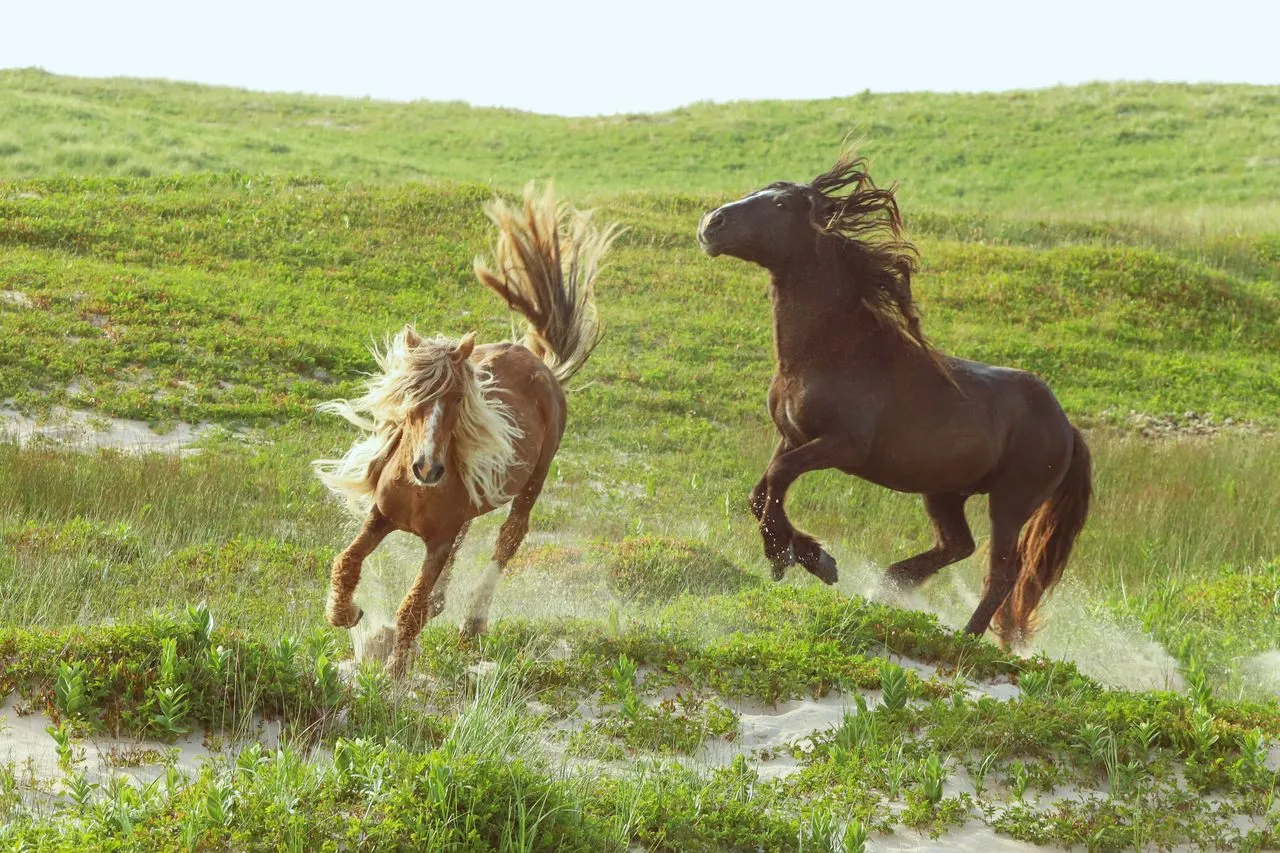
OUR SMALL GROUP WALKED INLAND ALONG a narrow, well-trodden path, following hoof prints in the sand, while stepping nimbly around large mounds of horse droppings. After landing in our helicopter at Main Station, we had set off on foot through the soft sand towards North Beach. Marram grass swayed in the breeze, giving the illusion that the island was alive, dunes rising and falling in slow motion like gentle waves. I scanned the sandy hills, searching for the island’s fabled wild horses, listening for the thunder of horse hooves, or even a distant whinny or soft nicker, but heard only the distant crash of waves. Then we crested a dune and there they were, our first sighting. A small family band grazed in the hollow below, three bay mares, a chestnut stallion, and a pale dun yearling whose fuzzy coat blended with the sand. I stood frozen with excitement. I had seen wild horses before, in Alberta’s vast foothills, but this was different. Here, they were not simply wild, they seemed part of the landscape, woven into the island’s fabric like threads in a tapestry. Sable Island’s horses impart a near-mythical quality to this distant sandbar. They are smaller than domestic horses, but sturdy, with broad shoulders, compact bodies, and legs thickened by a life spent navigating soft sand. Their coats were sun-faded and salt-roughened. Their tangled manes and knotted tails danced wild and graceful in the wind. Sable Island, a remote, crescent-shaped sweep of land some 290 kilometres southeast of Halifax, Nova Scotia, is one of Canada’s most unique and fragile landscapes.
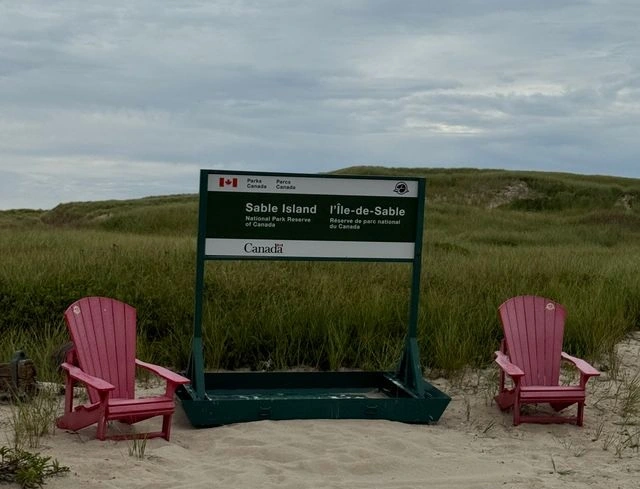
Roughly 42 kilometres long and rarely more than a kilometre wide, the island appears almost ethereal – an isolated ribbon of pale sand surrounded entirely by the vast, restless Atlantic Ocean. The island is constantly sculpted by fierce winds that reshape the terrain daily. Marram grass, deeply rooted and tenacious, is the island’s main anchor against erosion, holding the dunes together. I find the island wild, remote, and extreme, but also beautiful and gentle. Despite its isolation, or perhaps because of it, Sable Island sustains an unexpectedly diverse ecosystem. On reaching North Beach we stumble upon the world’s largest colony of grey seals, sunning on the sand or bobbing in the surf. The island is also a refuge for several bird colonies and endangered or rare species, including the Ipswich sparrow and the Roseate tern. The tiny Sable Island Sweat bee is found only here. Our guide, Fred Freeman of Kattuk Expeditions, tells us the island comes to life with flowers and tall grasses from April to July. For myself, as an equine lover and horse owner, it is the island’s 500 wild horses that have drawn me to this remote place. Gone feral from the days of the Acadian deportations in the mid 1700’s, they roam freely, resilient in an unforgiving, wind-scoured environment that shapes every aspect of their physical condition. With no human intervention, the horses get no veterinary care, hoof maintenance, grooming, supplemental feeding or shelter. The hooves of the younger animals, naturally worn by constant movement on the abrasive sand, tend to stay well-shaped.
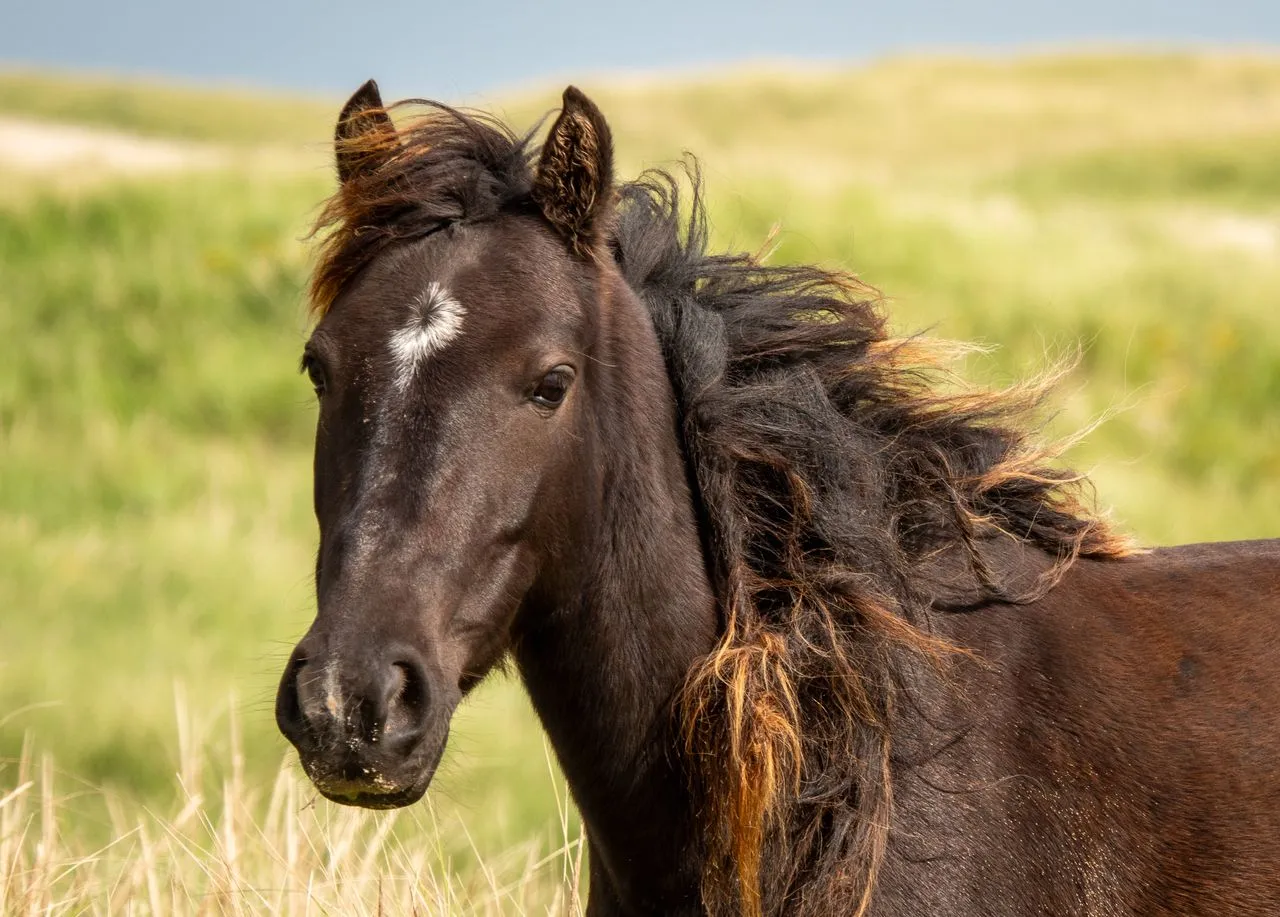
Though, without the intervention of a talented farrier, the hooves of the aging members of the herd are often over- grown, cracked, and curled like clown feet. The horses generally have a much shorter life expectancy than domestic horses because of the island’s harsh conditions, limited food, and heavy dental wear from the sandy forage. Freeman tells me that the average age is around eight years, made lower because of the death rate of young foals during the harsh winter months. Some individual horses may live into their teens or even early twenties, but such ages are uncommon. Freeman said he is often asked if it would be kinder and safer if the horses were moved, but he sees this as their home. “They have survived shipwrecks, storms, and starvation - everything the angry ocean could throw at them. They belong here as much as the dunes.” The ancestral territory of the Mi’kmaq Nation, much of Sable’s early history was fraught with shipwrecks and failed settlement attempts, but by the late 19th century, interests shifted toward the island’s natural bounties and geo- graphic uniqueness. In 2013, Sable Island became a National Park Reserve. Today, Parks Canada oversees conservation, biodiversity engagement, and public visitation. Spirited day excursions o‘er a glimpse of these efforts. The island is accessible by sea or air through a number of licensed tour outfitters, and is a popular stop for guests on small expedition cruises around the Maritimes.
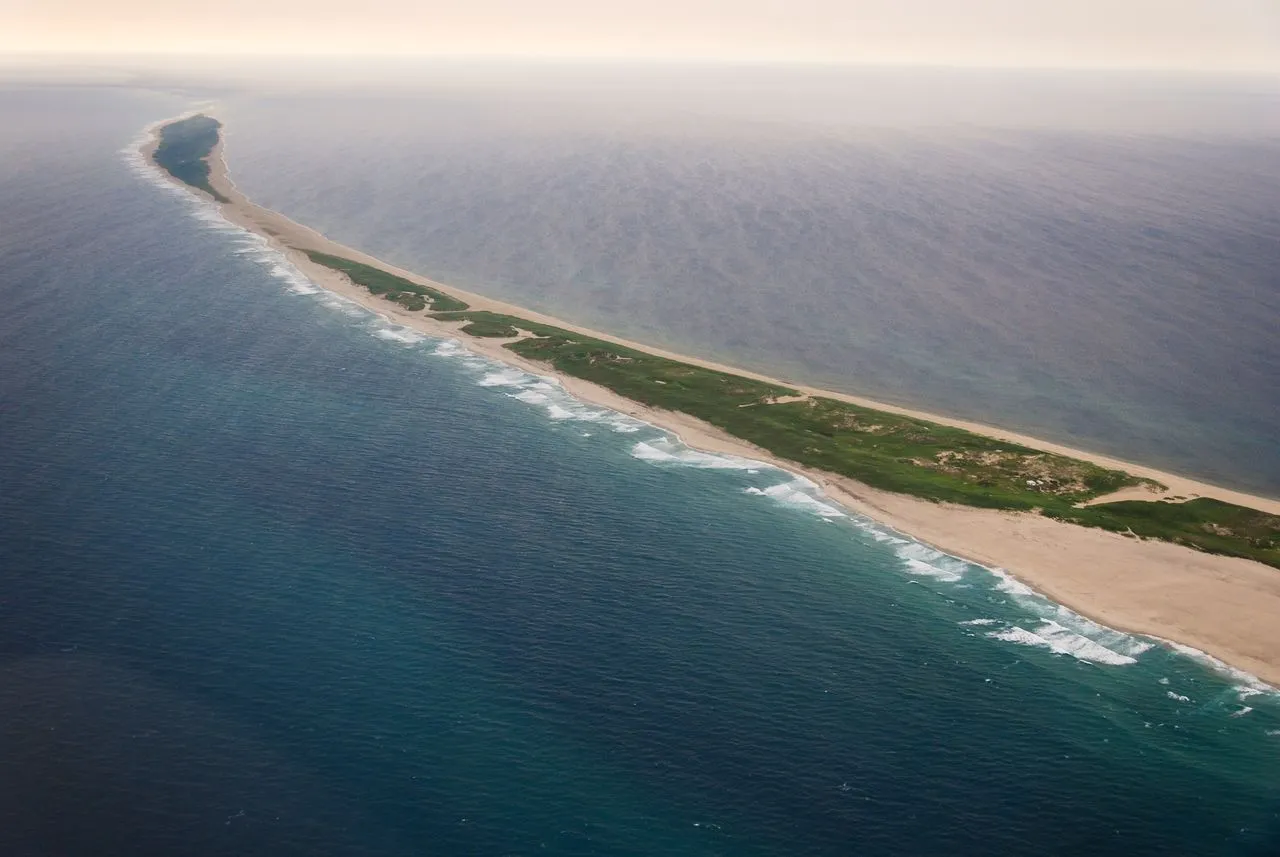
After lunch at Main Station, we headed to the island’s west end. As we moved along the beach and across the is- land, we encountered band another band of the wild horses, each with its own personality. One group lounged on a narrow ocean spit, palomino mares standing head-to-tail, flicking flies from each other’s faces with lazy familiarity. Foals napped curled in the sand, small, gangly, awkward things, with impossibly long legs. In another family group two young bachelor colts sparred, rearing and pawing the air. They weren’t fighting so much as rehearsing for adulthood. We spent the day tracking various bands, always at a respectful distance. Some were bold, approaching us until Freeman softly urged us to step back. “We are here to see horses,” he whispered, “But let them lead the story.” Other family groups were more wary when they spied us, slipping away behind dunes like ghosts. Protected since 1961, it is illegal to touch, treat, or feed these animals. Sable Island receives all of its fresh water from either rain or fog, which collects below the island’s surface and forms a freshwater lens. As freshwater is less dense than saltwater, it floats above it. Ponds dot the interior of the island, providing essential resources for wildlife. In the late afternoon sunshine, I sat on the dunes high above the Mummichug Ponds, watching as an animated and somewhat heart-breaking social dance took place. One agitated young outcast male ran group to group whinnying, aching for acceptance, only to be run o‘ by the resident stallion. A large herd emerged through the West Light Crossing heading to the ponds, silhouetted against sun and distant sea, moving in a slow, unified line. Their family structure was clear even from a distance - mares clustered together with foals tucked safely within, and stallions flanking the edges, watchful and deliberate.
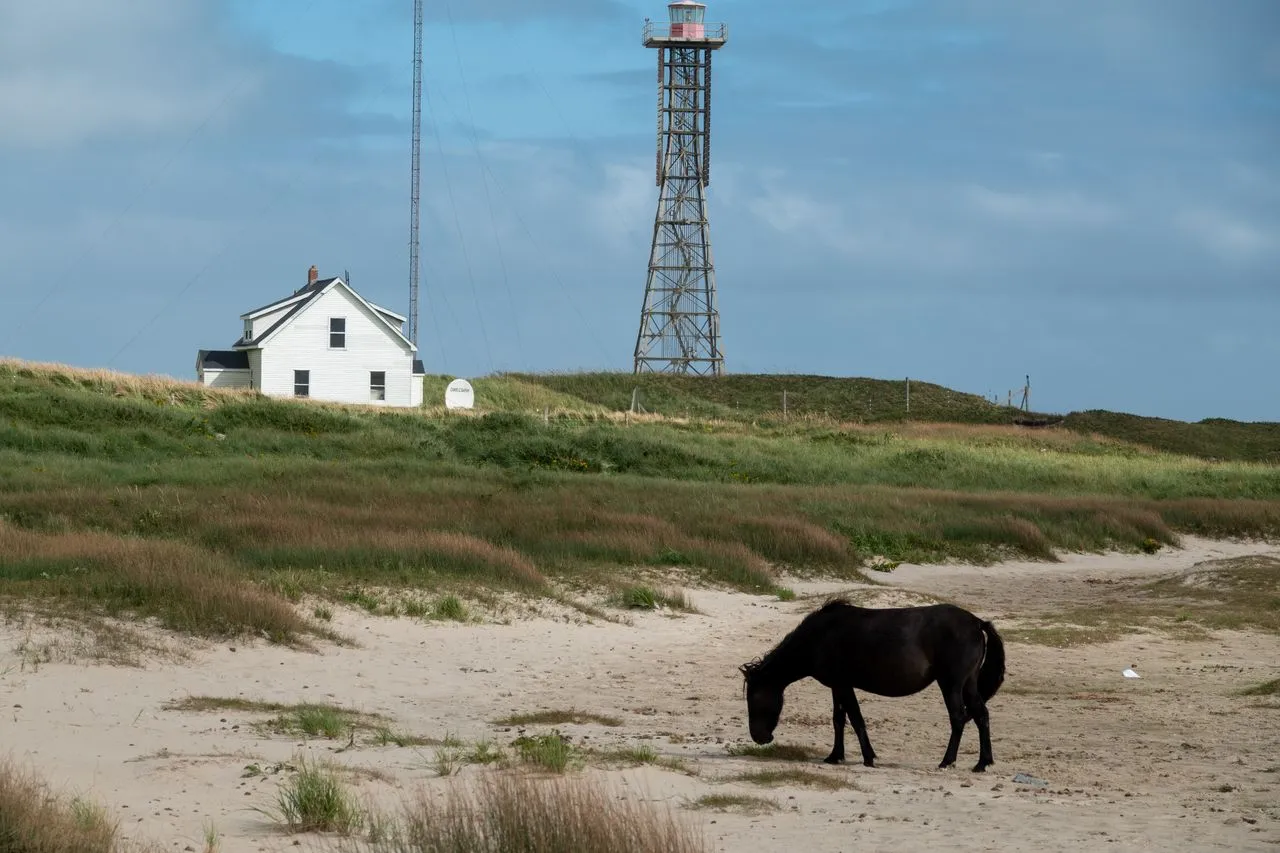
Our helicopter departed in the late afternoon. I watched the dunes shrink until they were nothing but pale curls in the vast blue Atlantic, a fragile spine of sand battling an endless ocean. I knew I was leaving something rare behind, not just a place, but a feeling of freedom, and the quiet certainty that some parts of the world still belong to themselves.
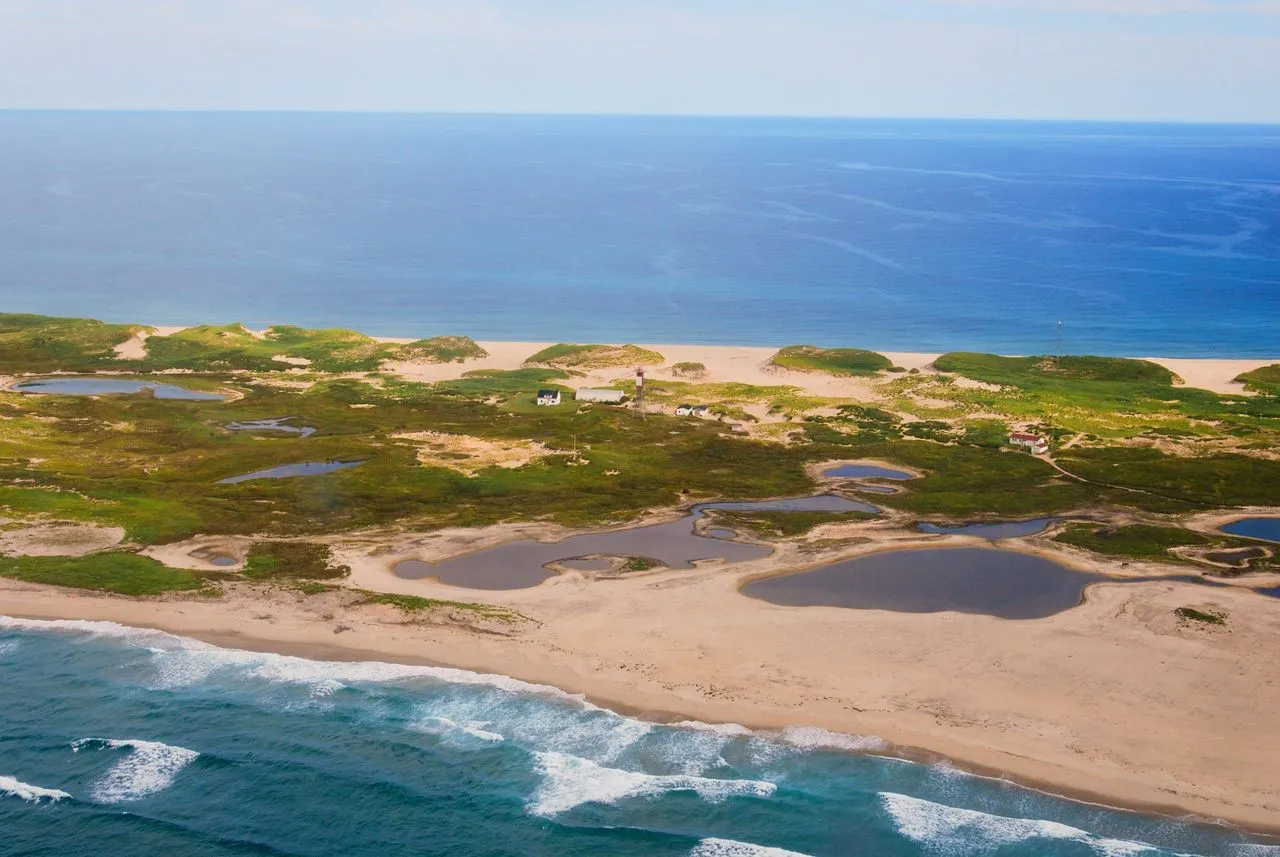
Sable Island has no airport. Planes land on the packed sand of the beach and helicopters at the helipad at Main Station. The weather is notoriously unpredictable, with frequent fog and strong winds, so transportation is weather-de- pendent (our flight was delayed a day by poor visibility). Most of Sable’s roughly 450 annual visitors arrive for day trips from June through October. Visitors to the island are required to partake in an orientation and pre-departure biohazard check. Once ashore, guests are greeted by Parks Canada staff who provide a tour of Main Station. Overnight stays on Sable are not allowed. Halifax’s waterfront Muir Hotel offers day trips to the island guided by Kattuk Expeditions.
Popular Articles & Videos
- Video: Meet the Wine Maker in the 'Tuscany of Austria' on the Danube
- You Need This Suitcase For Your Next Trip to Wine Country
- 3 New, Impossibly Picturesque Boutique Hotels That Make it Easy to Dream About Your Next Trip to Europe
- Cruising with History on Sea Cloud
- Video: Alaska Wildlife Encounters You Can't Miss