With windswept shorelines, ancient geology and rare creatures, life on Kangaroo Island unfolds on nature’s terms.
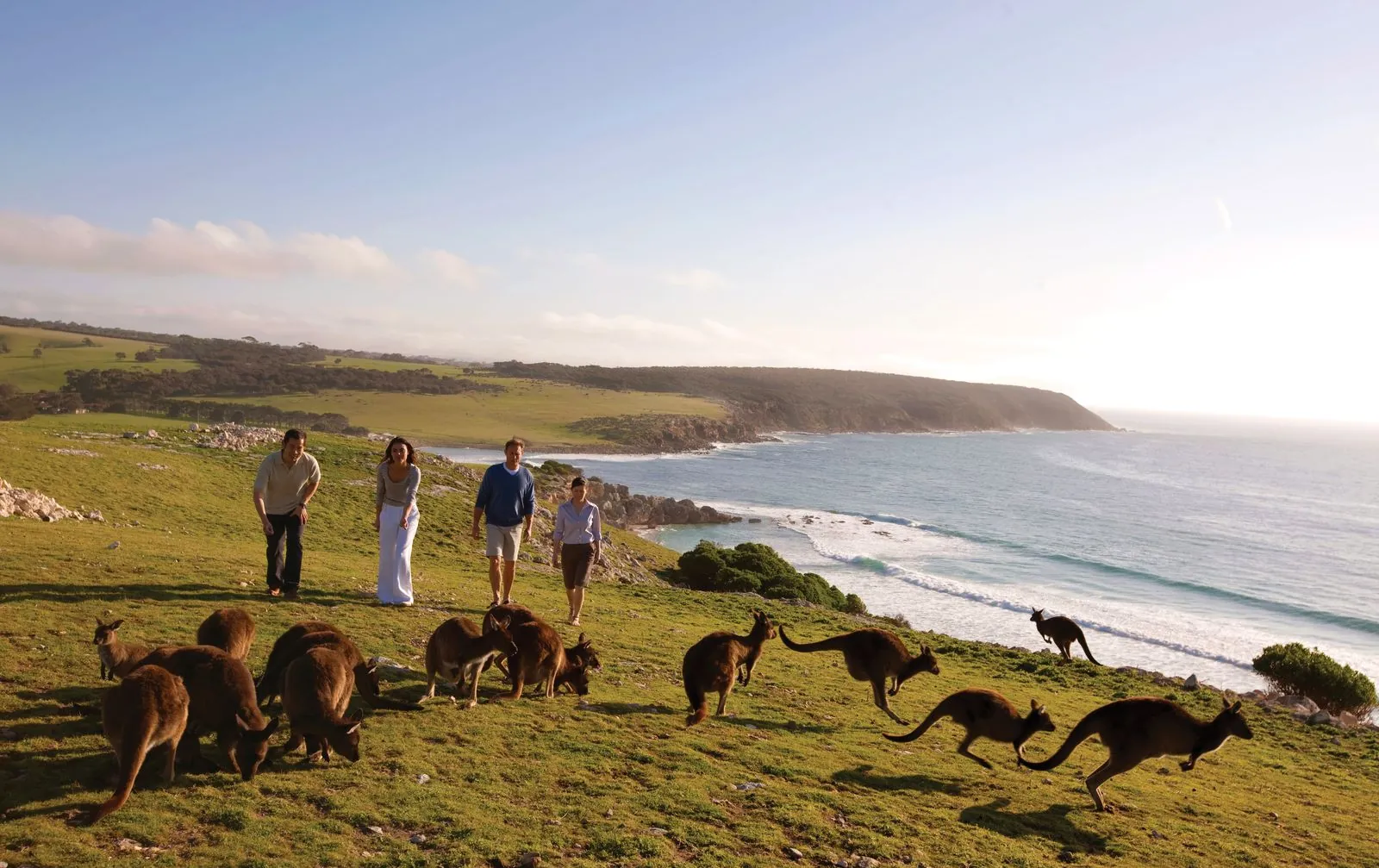
I am completely OK with being upstaged by the kangaroos.” Tamsin Wendt follows my gaze out toward the grass and surrounding Oceanview Eco Villas on the Red Banks coast of Kangaroo Island, where a mob of about 20 kangaroos are gathering near a water pump. “Keep an eye out for the two nesting pairs of wedge-tailed eagles on the property,” she adds. “They love the wind.” We’re here off the coast of South Australia to explore what’s often billed as the Galápagos of South Australia: a 440,000-hectare natural playground filled with wildlife. Our hosts Tamsin and her husband Tim Wendt operate their two large, luxury villas within a 200-hectare farm, offering visitors bespoke sightseeing tours each day. “All the things we love most about the Island are also what guests are looking for when they visit,” Tim says. “The wildlife in the beautiful night skies, stunning coastline and landscapes – this is what makes the Island so special. It’s not uncommon for us to have guests who have been on safari in Africa and toured the real Galápagos, and are coming to Kangaroo Island specifically to see our ‘zoo without fences.’” Colloquially known as KI, Kangaroo Island is an isolated haven of wildlife encounters, like a little time capsule; much of the wildlife has been here for more than 10,000 years. The people population reaches 5,000, with the number of kangaroos hitting 40,000 and the extremely cute wallabies numbering almost 400,000. There are no dingoes, foxes or rabbits – no natural predators – so the flora and fauna mirror what South Australia was like prior to European settlement. The Wendts have lived on the island for more than 20 years, moving from Adelaide. “We came and never left,” Tamsin says. “Our kids grew up here. The island is just one of those places that gets under your skin.”
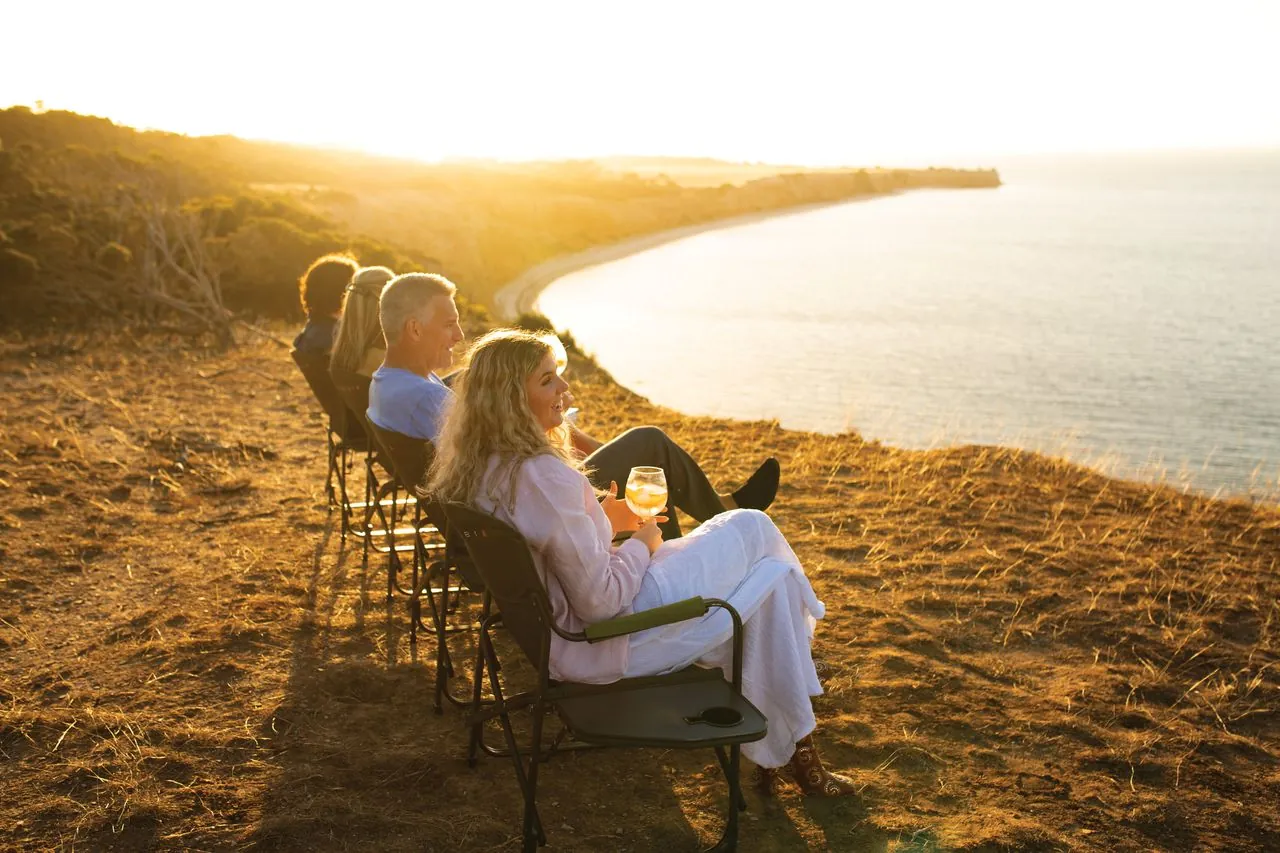
Wildlife takes centre stage—and we have front-row seats
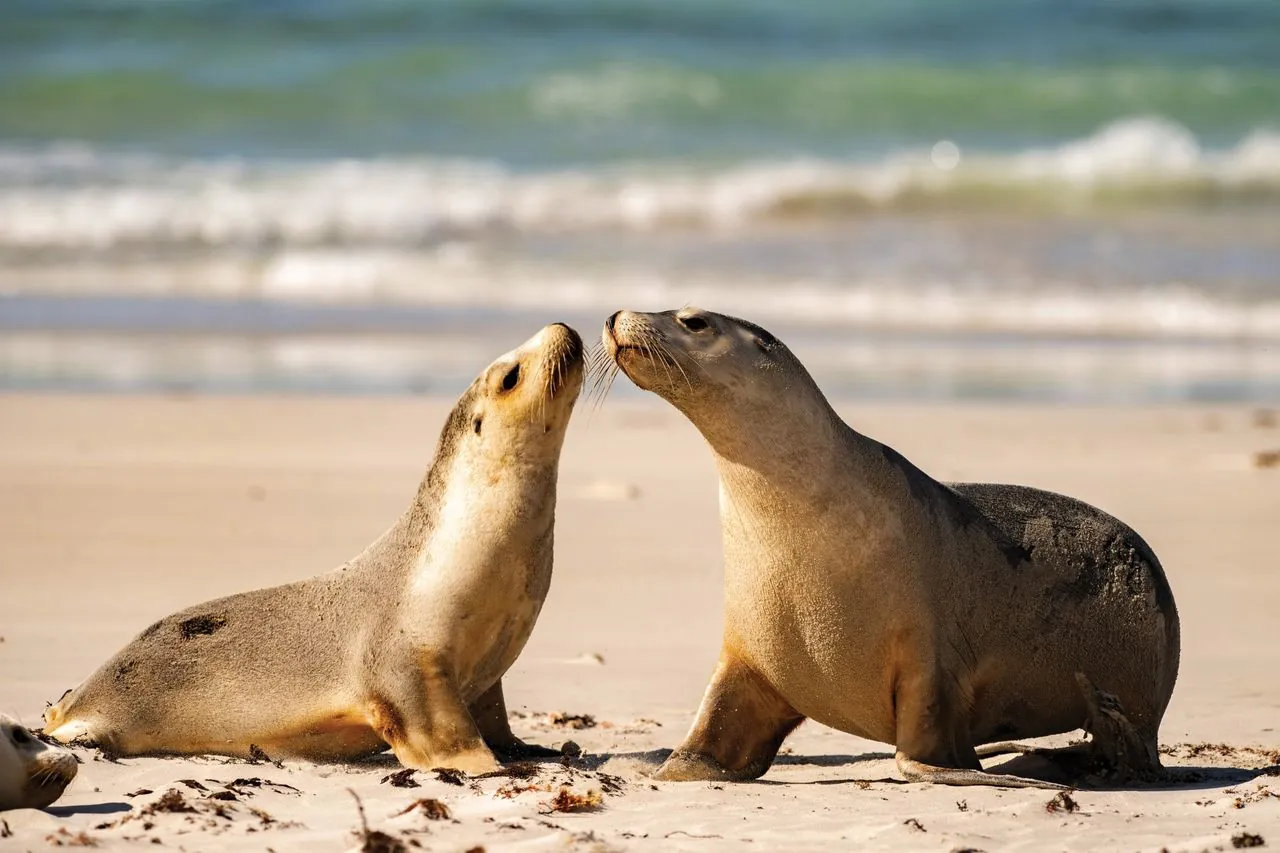
As the Mercedes SUV glides along the limestone roads toward Seal Bay on the island’s south coast, we have our first animal encounter – well, second, after our resident kangaroos. Seal Bay turns out to be not full of seals, but of the endangered Australia sea lion instead. We are visiting the pinnipeds’ breeding colony – walking right into their sandy bedroom, so to speak. We find dozens of them, pups and parents, sheltering in the dunes or basking on the beach. The females forage for food at sea for two or three days at a time, before returning to the beach exhausted and stuffed with fish and squid, and calling out to their pups. The bulls take shorter and more frequent trips into the ocean to eat, primarily acting as sanctuary protectors. We watch a few lone swimmers exit the water and wander the shores to find their kin. It seems rather trial and error, but it could be that the sea lion is just visiting with the various groups – some friendly, others less so. Witnessing this natural behaviour is what makes it all so fascinating.
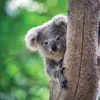
After fortifying with a picnic lunch in an old sheep shearing shed by a quiet lake, we chance upon our first koalas, spotted in groves of eucalyptus trees. “Koalas are becoming more rare on mainland Australia, due to loss of habitat, predators and illness,” Tim says. “They sleep for up to 18 hours a day, appearing like fluffy basketballs, nestled in the boughs of the gum trees.” Kangaroo island is also a bird-lovers paradise, with populations of coastal raptors, sea eagles, kestrels, hawks and kites. KI is still recovering from a devastating fire in 2019-2020 that destroyed almost half the island. Countless hectares were lost or degraded, the populations of animals decimated. Rejuvenation has been slow but steady. We pass by more than a few burn areas. A stop at a honey farm brings about a different kind of wildlife: Ligurian bees. Introduced to KI in the late 1800s, originally from the Italian Alps, this species is genetically pure thanks to the island’s disease-free isolation and strict biosecurity laws. KI harbours the last remaining population of them in the world. I easily find a corner of my suitcase for a jar of the earthy, flavourful honey.
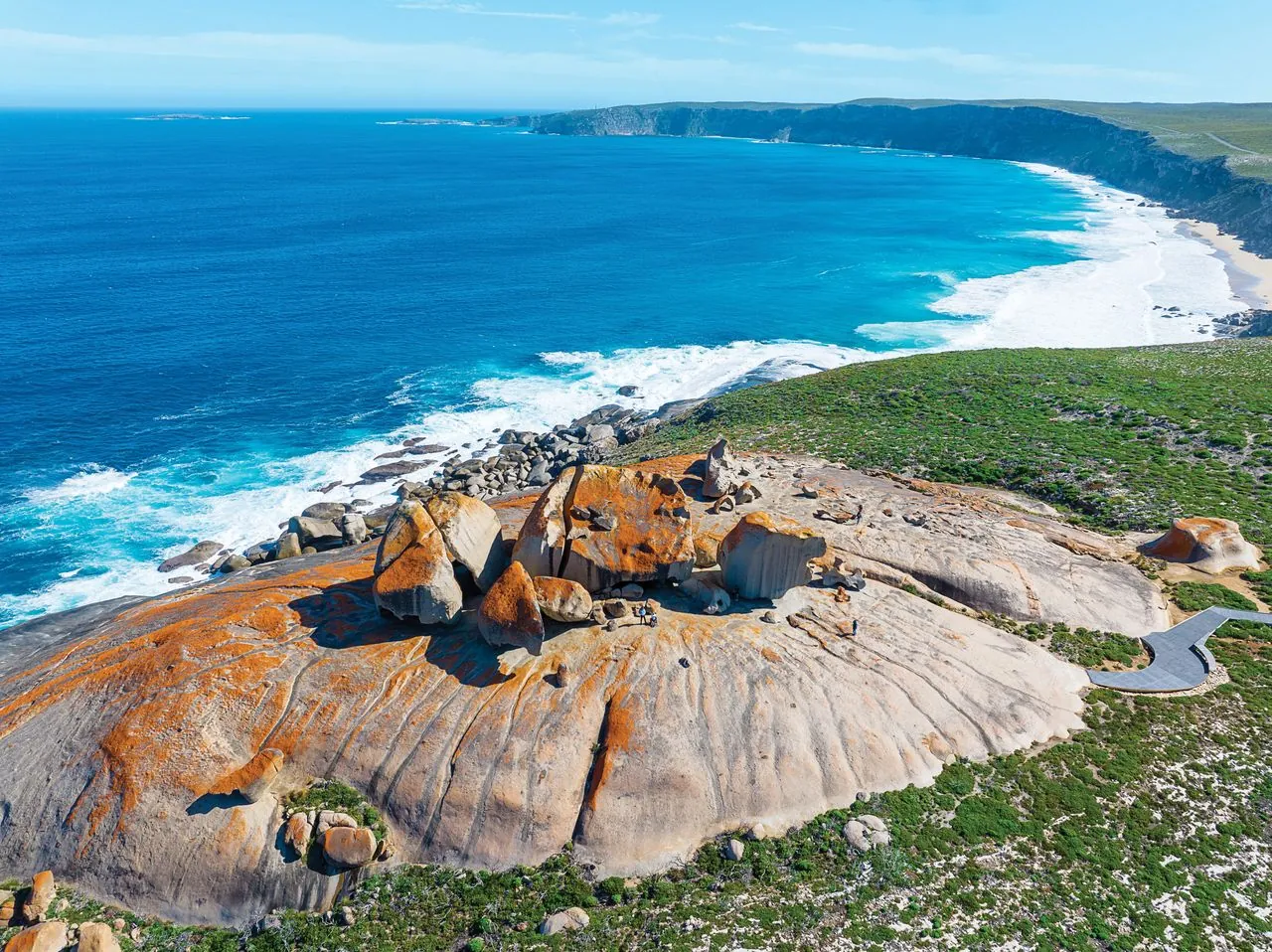
Beyond all this abundant wildlife, KI is also renowned for its staggering vistas, geological oddities and ancient natural history. The u-shaped beach at Vivonne Bay Conservation Park is consistently voted one of Australia’s most scenic. Six kms of soft, white sand stretch out to crystal-clear turquoise waters, while wallabies graze in the nearby dunes and eagles soar overhead. A variety of trails take you deeper into this quiet coastal scene. The postcard views continue a half-hour down the road at the 250-square-hectare Flinders Chase National Park. The Remarkable Rocks are indeed remarkable, granite formations shaped by the elements over the past 550 million years. The orange and red lichen glows best at sunrise and sunset.
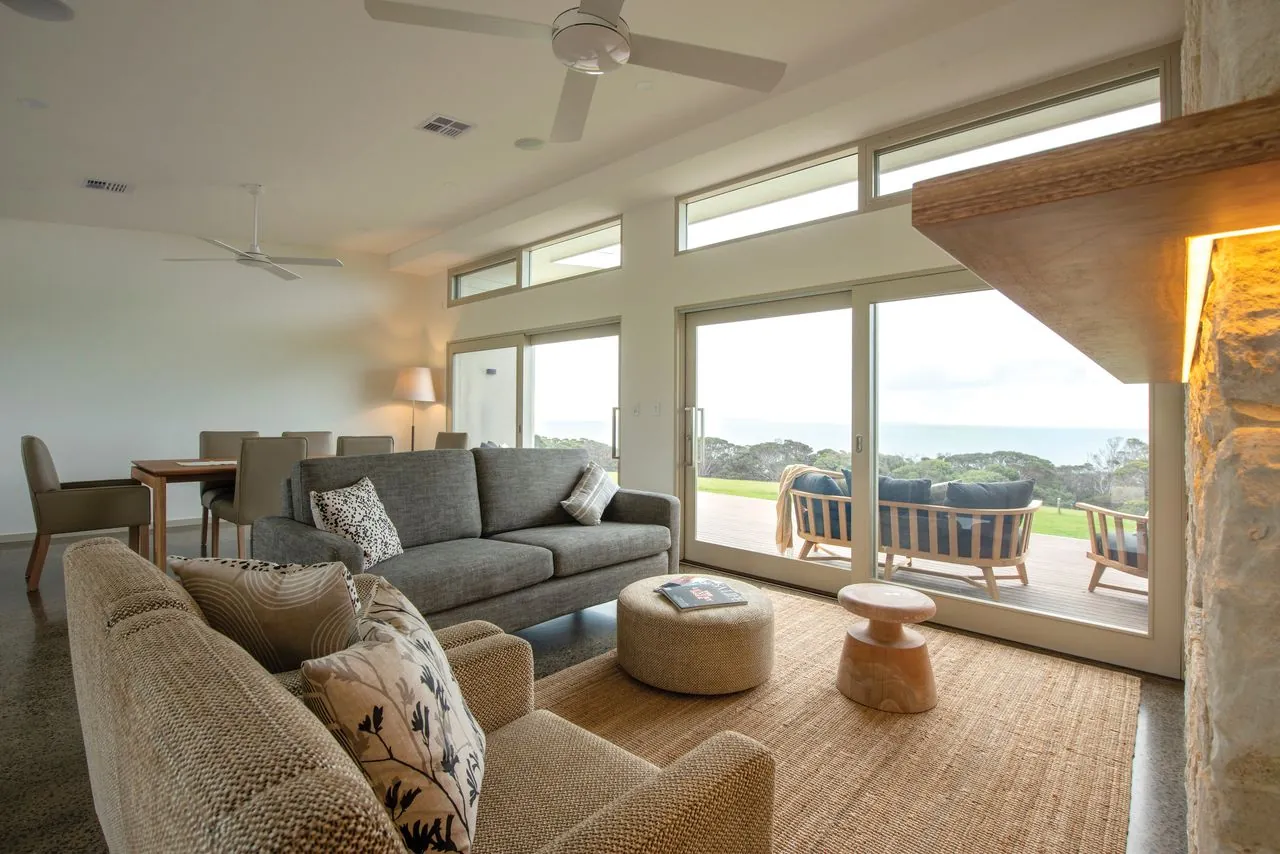
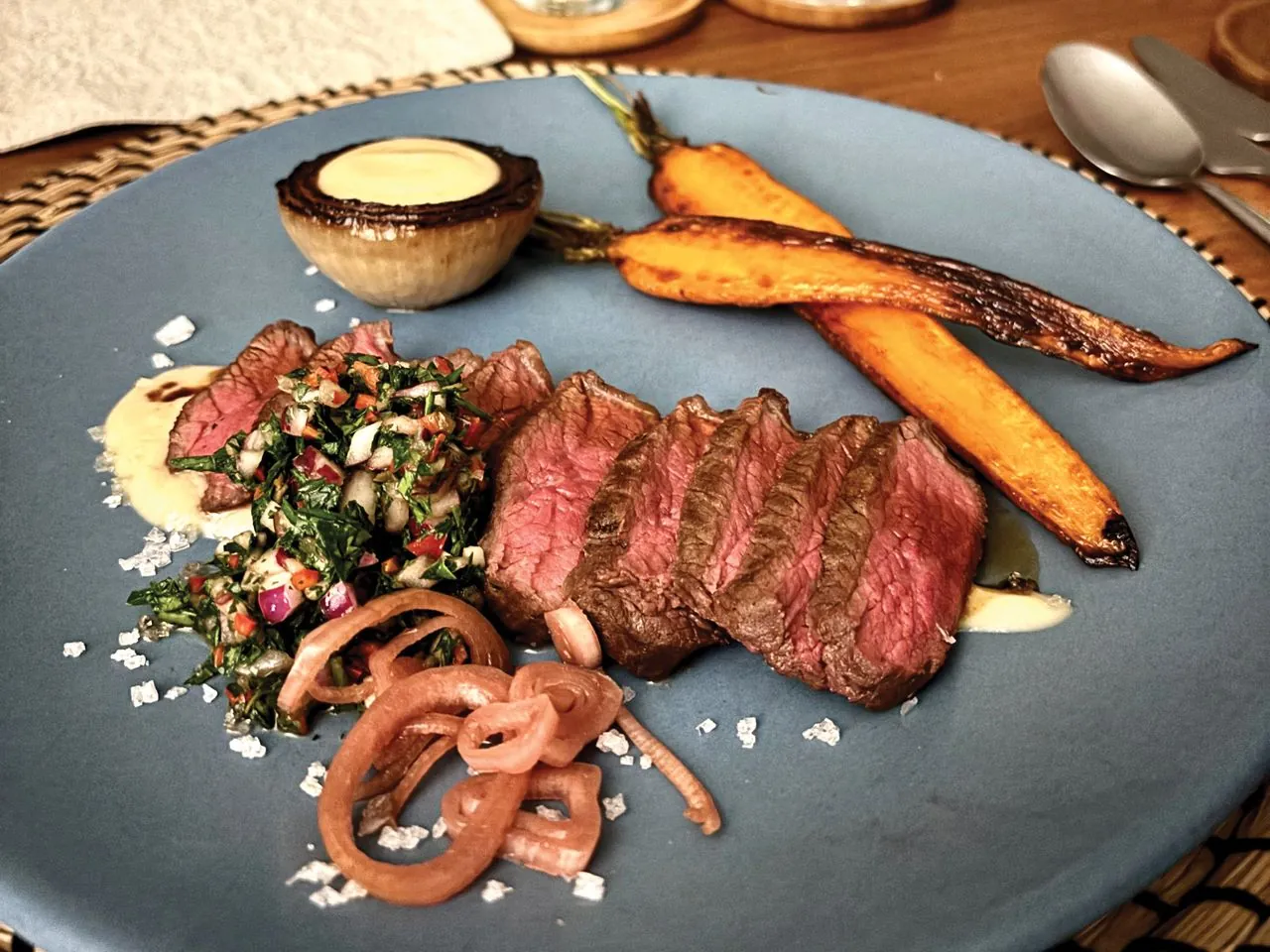
Weirs Cove Lookout delivers dramatic cliftop views of the Southern Ocean from the ruins of a lighthouse keeper’s house on Cape du Couedic. And nearby Admirals Arch was formed by thousands of years of crashing waves, the stalactite like rock formations hanging over the roaring sea below. Eco-friendly design in harmony with the environment. Back at the villa, I realize how easily I can get used to this kind of sustainable high life. All our meals are prepared fresh, the menus celebrating local products and ingredients, and showcasing island wines and gin. The villa’s construction is environmentally-friendly to the hilt, with 90 percent of the materials coming from within South Australia. The glass is viridian smart glass, designed specifically for the Australian climate. The composite decking is made of wood waste and plastic milk containers. All the furnishings are bespoke. “We worked with South Australian family-based companies to make the chairs, couches, bedheads and pillows,” Tamsin says, “and the spotted gum custom cabinetry is sustainable and ethically harvested.” Cross ventilation cools the building down. “People think that with luxury and sustainability you have to compromise somewhere, but absolutely not,” Tamsin adds. “Sometimes, people are horrified to hear that we don’t have air conditioning, until they realize that we don’t need it.” As well, little surprises reveal how far the details go: the cup in the bathroom for my toothbrush is made from abandoned fishing netting, and the polished-concrete flooring matches the brown pelts of the kangaroos outside.
Speaking of which, a few kangaroos make a surprise appearance at the front door just before dinner. They’ve been hanging around the small prep kitchen situated between the two villas, eating sweet potatoes. And as another fabulous meal hits our dining room table, we see one of the bigger kangaroos on the grounds behaving badly, knocking others away from the food bowls the Wendts have set up during dry season. When he’s
finished drinking from the water trough, he knocks it over. Jerk. Once again, it’s this kind of experience – not just seeing the animals but actually witnessing their behaviour up close – that makes our visit so special. Tamsin is spot on: “There’s nowhere else quite like it in the world.”
Written by Doug Wallace for Cruise & Travel Lifestyles magazine (Winter 2026).
Featured

Popular Articles & Videos
- Video: Meet the Wine Maker in the 'Tuscany of Austria' on the Danube
- You Need This Suitcase For Your Next Trip to Wine Country
- 3 New, Impossibly Picturesque Boutique Hotels That Make it Easy to Dream About Your Next Trip to Europe
- Cruising with History on Sea Cloud
- Video: Alaska Wildlife Encounters You Can't Miss